
Introduction
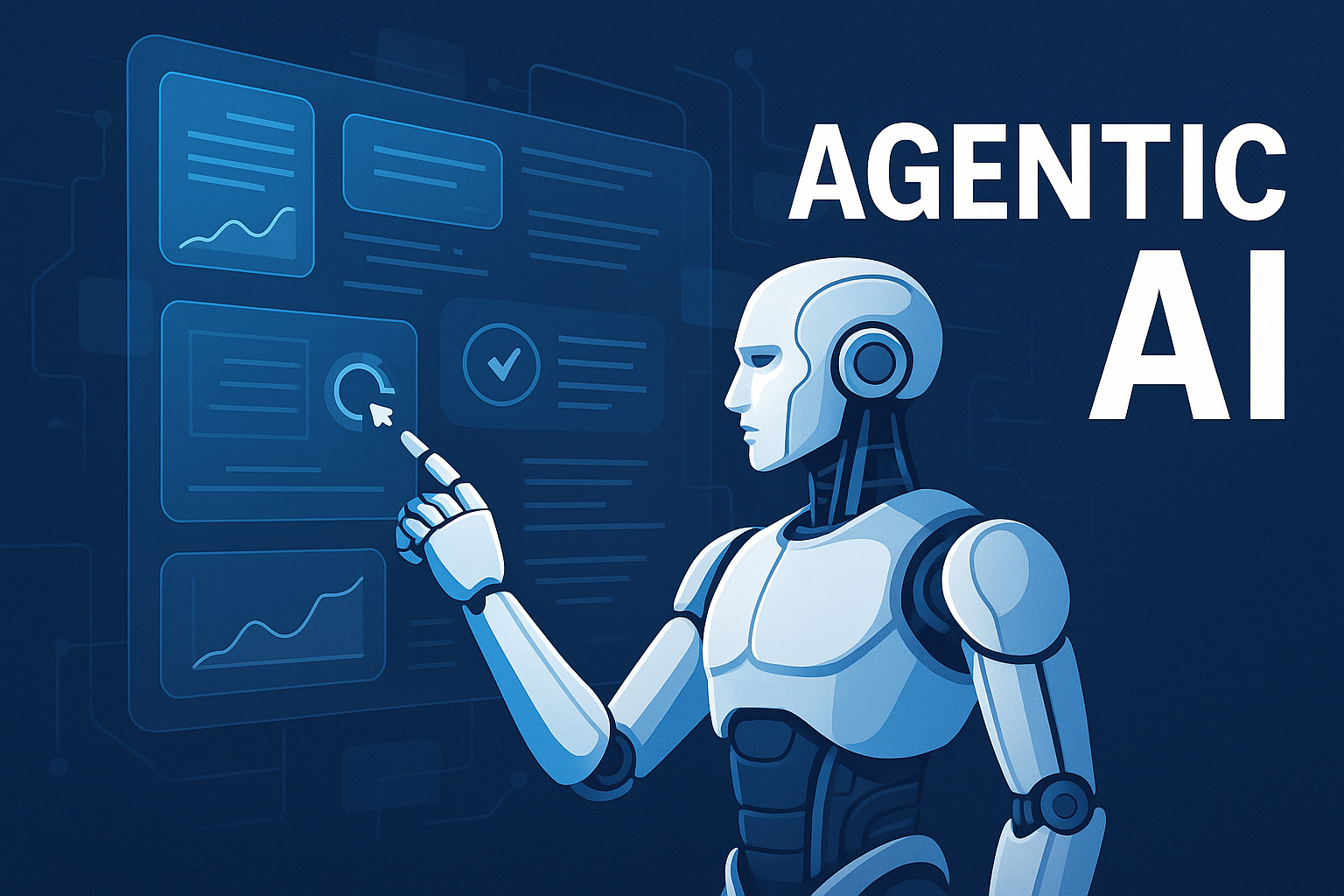
Artificial Intelligence has been around for a while, but we are now entering a new chapter: Agentic AI. Unlike traditional chatbots or predictive tools, Agentic AI agents are goal-driven, proactive, and autonomous. They don’t just wait for instructions – they sense, reason, act, and learn in continuous cycles.
This is what makes them truly revolutionary.
What Exactly Is Agentic AI?
Agentic AI refers to systems made up of autonomous agents that can handle multi-step tasks without constant human oversight. They can collaborate, share information, and dynamically adapt their behavior.
A typical agentic loop looks like this:
- Perceive – capture and interpret data
- Reason – build a plan or strategy
- Act – execute tasks using APIs, tools, or direct actions
- Learn – improve based on feedback
This cycle is what enables Agentic AI to go beyond reactive systems into self-directed problem solving.
Key Trends in Agentic AI (2025)
1. From Chatbots to Workflow Automation
Companies are moving from “GenAI that answers questions” to Agentic AI that runs processes. McKinsey calls this the answer to the enterprise “AI paradox”: smarter workflows, not just smarter models.
2. AWS and the Rise of Enterprise Agents
AWS recently announced AgentCore for Amazon Bedrock – a full development platform to build scalable, collaborative AI agents for the enterprise. Think of it as an operating system for AI workers.
3. Real-World Adoption
- SuperOps launched an AI Agent Marketplace for IT services. Tasks like ticket triage or SLA tracking are now automated – saving up to 40% manual effort.
- Salesforce Agentforce handles customer requests autonomously. Pilot projects show 84% of tickets resolved without human input.
4. Cybersecurity Gets Reinforcements
Security teams are overwhelmed with alerts. Agentic AI agents now triage incidents, run diagnostics, and escalate only what matters – freeing experts to focus on critical cases. Two-thirds of SOCs already deploy or plan agentic systems.
5. Personalized Digital Companions
In consumer tech, Agentic AI is shifting towards personal digital agents. These don’t just answer but actively manage your calendar, filter information, or even negotiate on your behalf.
6. Customer Experience Reinvented
Qualtrics is experimenting with multi-agent systems that act invisibly behind the scenes, adapting to customer feedback in real time. Airlines and e-commerce brands are already seeing smoother, more human-like experiences.
7. From Buzzword to Critical Mass
2025 marks a shift: Agentic AI is no longer experimental. Enterprises now showcase clear, measurable ROI instead of vague AI pilots.
Practical Examples of Agentic AI in Action
- Customer Service Bot that not only responds but also initiates refunds, tracks shipments, and contacts suppliers.
- Predictive Maintenance in Manufacturing – Siemens agents analyze sensor data, cutting downtime by up to 25%.
- Automated Stock Trading – JPMorgan’s LOXM agent reacts to market shifts in real time, outperforming human traders.
- Code-Generating Agents – Manus, developed in Singapore, writes and deploys production code with minimal human touch.
- Everyday Life – Kruti, an Indian super-agent, books cabs, orders food, and manages daily tasks across apps.
Why This Matters Now
- Efficiency Gains – Agents don’t just help; they work as digital colleagues.
- Scalability – From single tasks to enterprise-wide processes, they adapt and grow.
- Governance & Trust – Unlike “black box” AI, agentic systems operate with defined goals and guardrails.
- Competitive Advantage – Early adopters are already reporting cost savings, faster workflows, and higher customer satisfaction.
Conclusion
Agentic AI isn’t just another hype term. It’s a paradigm shift in how we design and use intelligent systems. From enterprise operations to personal assistants, agentic agents are reshaping the way technology works for us – proactive, autonomous, and deeply integrated into daily workflows.
The question isn’t if your business will use Agentic AI – it’s how soon.

Leave a Reply